Welcome to CET Talks, the International Accreditors for Continuing Education and Training’s podcast, where we convene thought leaders in the continuing education and training ecosystem to share ideas, research, best practices, and experiences that promote the creation of a world that learns better. Enjoy the episode.
Randy Bowman: Hello, and welcome to CET Talks. My name is Randy Bowman, IACET’s president and CEO, and I’m excited to welcome back our leadership track host, Mike.
Mike Veny: Hi Randy. And hello to our listeners out there. We are going to be talking about a very important subject. Randy, we were talking about steak before, and the next time you and I sit down for steak, I’m just going to tell you right now on air what we’re going to talk about. I’ve got way too much on my plate.
Randy Bowman: Me too!
Mike Veny: Oh, interesting.
Randy Bowman: I mean, seriously. I was hoping to talk to you about that, too. I mean, just today, I have three podcast recordings, one professional development webinar to host, three meetings with organizations that are interested in becoming accredited, prepping for tomorrow’s treasurer’s meeting, and a to-do list that has more plot twists than a Netflix thriller. And on top of that, I have 500-some-odd emails that are all waiting for some response from Randy. And Mike, how do you handle it?
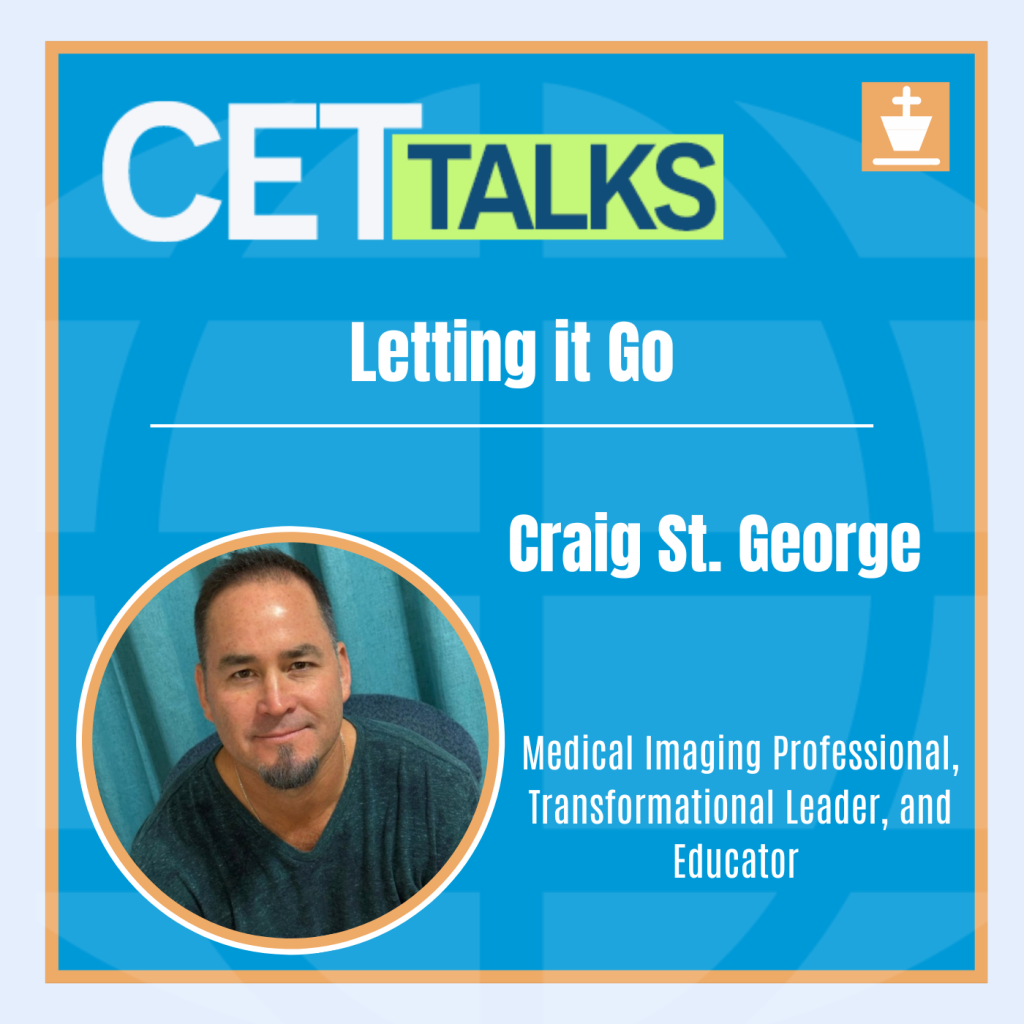
Mike Veny: I don’t know. One of the things I will say, though, is that I’m excited for today’s guest. If you are listening to this and you’re a leader of an organization—it doesn’t even matter what type of organization—you need to listen to this episode, because it’s about this lovely topic called strategic shedding. Our guest today is Craig St. George, who’s a medical imaging professional, transformational leader, and educator. His career goal has always been to improve patient care on a national scale by shaping medical imaging and radiation therapy education through curriculum development and professional training initiatives. Craig, welcome to our show.
Craig St. George: Thank you. It’s great to be here. I appreciate you having me.
Randy Bowman: All right, Craig, let’s just jump right in and start with the basics. What the heck is strategic shedding, and why does it make me think of a snake?
Craig St. George: Yeah, you’re not the first person to bring that up. That’s naturally where everybody’s mind goes, right? So, snakes, by nature, have to shed their skin so that they can grow. It’s called ectasis, and it’s just part of what they do. That’s not strategic, though, but their skin starts to feel too tight, and it’s old, and it’s damaged, and they just have to shed it and get rid of it. Don’t you feel like that at work sometimes, where you’re starting to stack up all of these things, and you’re starting to feel tight, and you just have to get rid of some of that old and damaged stuff? Well, that’s exactly what strategic shedding is: looking at what’s important. When you go back and look at your job description, and you actually recognize the things that rise to the top and the largest percentage of items, over time, the longer you’re somewhere, you start to stack on more things that don’t necessarily align. So, at some point, you’ve got to get rid of something.
Randy Bowman: So, what were the first responsibilities or processes that you intentionally let go of, and why?
Craig St. George: Naturally, you start to find your way towards certain committees and work groups, like project groups, and those are the things that are very time-consuming. You want to do them, but the reasons that I had to get rid of some of those things that I was getting pulled into, or I just wanted to be there with, were that they didn’t align with the team goals or the department objectives. Therefore, they weren’t moving the organization forward anymore, or maybe they weren’t the right strength fit. A lot of people love getting outside of their comfort zone, and I’m one of those people, but that doesn’t mean that I’m the right strength fit for this particular project. Or there are things that I was personally and professionally interested in. They were fun for me, maybe not for others, but I was really excited about them. Again, they didn’t align with what my core responsibilities were at work.
Mike Veny: There’s this book called The Power of a Positive No, and it’s written by a hostage negotiator, his name is William Ury. One of the things that the book brings up is that we avoid saying no because we think it’s going to damage a relationship. So, we end up saying yes and being resentful of the fact that we said yes. And I think everyone who is listening knows what I’m talking about here. How did your supervisors or executive team respond when you started saying no or delegating more intentionally?
Craig St. George: So, now we’ve reached the cautionary portion of our discussion, haven’t we?
Mike Veny: Here we go.
Craig St. George: Yes, people do have that sense of fear when they want to say no to something. The organization’s leaders, the ones that you report to and work with regularly, need to be on board with this. It’s really a conversation. It’s a dialogue that you have with them. And normally in a strategic shedding scenario, it’s actually coming from them, hopefully, and they’re looking to move that organization forward. So, the ones that I worked with, they were super on board with looking at what was super important that was going to move the organization forward. And that’s the conversation that you want to have. So, if you’re feeling a little bit fearful of having that and you feel like you’re saying no, that’s not what you’re doing, you’re reassigning the focus on what’s absolutely necessary to move the organization forward, to meet the objectives of your working group, your department.
Mike Veny: Well, let’s say hypothetically, I am in a workplace culture where everyone’s expected to say yes, it’s a cultural thing, and they’re resistant to even the thought of that [saying no]. What would you encourage me to say to them?
Craig St. George: Yeah, so you ask a series of questions there. What is the actual intent of doing this particular project? It might be something that has been around forever, and I’ve done this before in an old role as a leader in a healthcare environment. I was going back and essentially checking the work of everything that happened in patient care the day before, and I was spending hours doing this. And then it finally went to my leader, and I said, where did this task come from and how important do you believe it is to the function, the daily function of this department so we can care for patients? I was able to point out the idea that the billing encoders of the facility were actually doing the same work that I was doing. So, I was just spinning the department’s wheels and not really able to focus my energy on patient care, which, for that particular role, was the most important thing that needed to be done. And that’s how I sold getting out of it, doing a task that just really didn’t need to continue.
Mike Veny: So, did this process impact your organization’s educational offerings or the member experience in a way that was negative?
Craig St. George: Not that particular one. Going back to my more current role, it was actually a means by which for me to step away from some of those committees and work groups that I was part of. It was actually a means by which to go back and focus energy on the gap analysis for educational content so that I could turn our department’s attention to strictly the educational resources that needed to be created now. It was actually a really good thing because we could stop doing things that weren’t as important and start focusing on things that we needed to do to cover our gap analysis and education.
Randy Bowman: So, you talk about focusing your energy on what’s important, figuring out what is important. How do you regularly assess what’s worth keeping on your plate and what can be shed? Do you have a framework?
Craig St. George: I do. I do. And that goes back to that series of questions that you kind of want to put in line before you’re having this conversation with someone who’s going to determine whether or not you’re going to keep doing this thing or not. So, a series of questions: ask first, what is this for? And once you answer that question, then you can start to identify how important it is. Who benefits from it? If you’re the personal beneficiary of this task that’s going on, that’s probably not what your organization wants from you. And why is it important to continue? This could be financially driven, or it could be growth and development driven. This could just be politically driven. Those are all really good reasons to continue doing something, but that’s a question that needs to be answered, as well.
Mike Veny: There’s this book by Marie Kondo, The Life-Changing Magic of Tidying Up, and in the book she says that one of the ways to deal with clutter is you take your clothes, for instance, out of your closet and you grab a clothing item and just hold it and say, ” Does it spark joy?” And that’s just what you said, about what the intent of this project that we’re doing is a reminder of pausing and getting clear on what something is for you, and if it’s worth it or not. I love the simplicity of that. In addition to that, what are some unexpected lessons you learned about yourself as a leader through this process? Especially again, to someone who’s listening right now who’s interested but resistant to this.
Craig St. George: We resist this so much. Going back to the snake, that’s nature. Strategic shedding comes with a lot of resistance. It is hard to break away from what you are so inherently drawn toward doing and saying, yes, I want to build my career. I want to do that. I want to build the careers of the people who report to me. I want to help them do more and achieve more. That’s the biggest, most important word there. It’s usually you’re just trying to do more. So, you ask what I learned about myself. I try to make annual reviews as meaningful as possible. It is a really important aspect of being a leader to me. I had a tendency to drift and look for new things for people to do so that they can expand their range.
Everybody wants to be really excited and passionate about their work, but that doesn’t mean they want to do something new. That’s something that maybe I look for in the work that I do, but a lot of people that I reported to, and when I really started listening and paying attention and working with some of my direct reports, I realized that they were more interested in being proficient, like genuinely proficient at the things that they were already doing well, and that’s what they wanted their annual review to be about—how to get even better at that thing. And that’s okay.
So, when you’re stacking things up, and you’re continuing to add to your own plate, you’re usually adding to everybody else’s plate, right? You had too much steak on your plate, and you wanted to share it with Randy earlier. It’s like that’s what we do. We get too much, and then we have to share it. If you’re resistant to shedding things that are putting too much on your plate right now, consider all the people around you also. You’re probably doing something to create too much work for not just yourself, but for everybody. That’s a good reason to really consider what’s important.
Randy Bowman: Now, Craig, I’m going to have to push back on too much steak on my plate. Maybe too many potatoes, but you can never have too much steak.
Craig St. George: That’s fair. That’s fair. Horrible analogy. You caught me on that.
Randy Bowman: So, what advice do you have for leaders who feel like they have to do it all to be effective?
Craig St. George: Yeah, that comes up a lot, right? And some people will even put that if they’re going for a new interview. What’s one of your biggest flaws? Well, I just feel like I have to be all things to all people, and we don’t need to do that. And that’s one of those things that you hide as a flaw. That’s not really a flaw; that makes you sound good when you’re trying to make yourself sound bad, but it is. In the end, you’re both smiling, and that is bad. So, number one, trust your colleagues; inspire creativity. You normally, in most cases, had something to do with the hiring process. You saw something interesting about this person or something creative about this person, and you wanted to bring them aboard to help because they had something that your team needed. Trust them to help. If you’re continuously involved in the work they’re doing, you’re not inspiring their own creativity, and you’re not allowing them to grow in the way that they need to grow.
So, number one, trust your colleagues. Number two, focus on what sets you apart and what can or should only you be doing. Choose three things; maximum, three things. If you’re doing more than that, then you’re not really focusing on the most important things that you’re supposed to be doing, you’re not delegating, and you’re not assigning tasks to those people around you who are also super interested in being creative in doing some of these things, as well. So, focus on what only you should or could be doing. The last one, I’ve got a question for those leaders—what are you afraid of?
There’s usually some fear out there, and I learned this about 15 or 16 years ago, early on in my leadership venture, because I had a leader who was leaving her position, and she told me, while she was leaving, that her biggest fear was that the next person was going to come in and do a better job. And I knew then that was the wrong way of thinking. You want to be creating, at least I do. Maybe this sounds crazy, but I like to continuously create a succession plan so I can grow and develop, and so the people who are working with me can grow and develop. I hope, more than anything, that the person that comes in behind me does a better job than me because I’ve left that area in such good shape better than when I got there that they’re going to be able to do the exact same thing and carry on the work, but do it better. So, that’s it.
Mike Veny: You said something before that I need you to just expand on for me personally. Actually, when I was getting steak with Randy, one of the things he said to me was that, as a leader, he focuses on three things, and he told me what that was, and of course, I completely forgot, but this was a reminder from the universe that I need to focus on that as a leader myself. Go back to that. So, you need to focus only on three things. I mean, the thought of that, especially if you’re overwhelmed with so many things here and there, how do you get to those three things? Is it just going by the job description that you have and just distilling it from that? Or another process?
Craig St. George: Do you remember being in science class where you would take large marbles or something like that, and you would put them in a jar, and you’re usually doing a fluid displacement test or something. So, you put the big marbles in there first, and then you take some gravel, maybe, and you kind of sift that in there, and it fills in all the little spaces. And then you take some sand, and you put that in there. You still have room for water.
Okay, so take out the water, take out the sand, take out the gravel, what’s left, only those big pieces, and they usually contain elements of the gravel, the sand, and the water, but those are the big elements that you want to concentrate on, and you just write those things down and then start whittling away. The rest of it is all fluff. That’s just the answering of emails, having the conversations, the meetings, and all that stuff. That’s not work. The big things, the big responsibilities are those giant marbles that take up most of the space. So, I don’t know if that helps or not, but that’s kind of how it’s done. And instead of just putting blank marbles in there, maybe you write something on them, curriculum development, big marble goes in the jar, educational content gap analysis, big marble goes in the jar, and then that’s what you’re left with.
Randy Bowman: Awesome. Thank you so much, Craig. I do have one more question here. Do you have any examples of a responsibility you tried to shed, but then it boomeranged back to you?
Craig St. George: Absolutely. Yeah. A really big one that I started about six or seven years ago was to learn about artificial intelligence and how that was going to impact medical imaging and radiation therapy. And it takes up a lot of time, and I did a lot of work in getting some certificates, getting education, putting together presentations, and trying to educate the community and working with other people who are trying to educate the community about AI and ML and their impact on medical imaging and radiation therapy. But I did this shedding process, and that was one thing that was in the category of personally/professionally of interest to me. So, I thought it would be good if I stopped doing as much work on that. Total boomerang. It just became so inherently important for the education of the community, of the field, and in my role at the time, it was my job to educate the people in the community, so it had to come back. So yep, you caught me. It doesn’t always work.
Randy Bowman: Craig, as we wrap up, we always like to ask our guests one last question. What does a world that learns better look like to you?
Craig St. George: Learning isn’t just for school or work. It’s a part of being alive. It’s a part of humanity. So, by continuously learning and improving access and resources that are available to us to continue learning, we create a culture of curiosity. And when we’re curious, we’re less scared because we don’t really have time to be fearful anymore, because we’re so curious about each other, about processes, about things, about access to things that are available to us. A world that learns better just connects better, as far as I’m concerned.
Randy Bowman: Wow, I love that idea. A culture of curiosity. Craig, thank you so much for delivering an engaging and informative presentation for us today. I’m still kind of grappling with this idea of a culture of curiosity here and thinking about it. It hits home because when you’re trying to lead well, especially when that pressure’s on, it’s easy to slip into autopilot. But by asking those questions, like, why do we do this? Who benefits? What’s the intended outcome behind the task? That’s how we stay sharp, stay focused, and stay aligned to our mission. And those questions, all three of them, come from that culture of curiosity. I think that’s going to be my takeaway today: make sure, Randy, you maintain that curious mind and keep investigating the purpose and intent behind the tasks you’re doing. Mike, what are you taking away today?
Mike Veny: Well, this interview made me uncomfortable in a good way. I think it’s the first time I really got uncomfortable because it exposed some real truth. And honestly, I wish the interview were a lot longer and could have been a workshop, a deep dive into this, because there’s so much more to go into today. But one of the things I got is going back to the initial questions you can ask is what is the intent of doing this project or task, or whatever it is, or having this commitment? And I think that’s a really good thing. Also, the important thing about trusting your team, and there’s a resource I want to point out to everyone, a book called, If You Want It Done Right, Don’t Do It Yourself. That’s actually a very fast read for people who feel they need to do it all, and it helps you get rid of that, actually, pretty quickly.
So that’s what I got out of it. So, as we wrap up this discussion on strategic shedding, we’d love to hear from you. When it comes to your professional experiences, what action items do you think you can shed? Please let us know because we need more education around this and support from other people. So, it’s going to help us just as much as it’s going to help our community.
Randy Bowman: Remember, you can submit topic ideas, suggestions for guests, review our archives, and more at the CET Talks website, available at cet-talks.org. Don’t forget to subscribe to this podcast on your favorite platform so you don’t miss any of these engaging episodes. Thank you to our guest, Craig, for joining us today, and thank you, our listeners, for listening and walking this journey with us.
Host: You’ve been listening to CET Talks, the official podcast of IACET. Don’t forget to subscribe to the podcast on Spotify, Apple Podcasts, or wherever you listen to podcasts. To learn more about IACET, visit iacet.org. That’s I-A-C-E-T.org. Thanks for listening, and we’ll be back soon with the new episode.