Host: Welcome to CET Talks, the International Accreditors for Continuing Education and Training’s podcast, where we convene thought leaders in the continuing education and training ecosystem to share ideas, research, best practices, and experiences that promote the creation of a world that learns better. Enjoy the episode.
Randy Bowman: Hello, and welcome to CET Talks. My name is Randy Bowman, IACET’s president and CEO. I’m excited to be here with our learning track cohost, Meghan.
Meghan Conan: Hi, Randy. It’s great to be here with you today. My name is Meghan Conan. I am currently the program manager for ASTM International’s live training program. But one of my favorite things that I do in addition to that is working with IACET. I am obviously enjoying being the co-host of this learning podcast, as well as teaching the open digital badging course that IACET offers, and I participate in many, many of their task force groups.
Randy Bowman: We’re very lucky to have such a dedicated volunteer like Meghan. Like any nonprofit, it’s volunteers who make the work happen, so we appreciate Meghan and her dedication. So, Meghan, I wanted to tell you that this past weekend I was at a swim meet, and as you can imagine, it was loud and it was crowded. There was this one coach who had this high, shrill whistle that he was using over and over again to encourage his swimmers. I’ve got to tell you, talk about sensory overload. After about five minutes, I was marking each and every emergency exit and looking for the quickest way out.
Meghan Conan: Yeah, I think I’d have been right there with you on that one. I haven’t been to a swim meet in quite some time, but I know it’s a loud event anyway, with everyone cheering and the parents. To have that in addition to all the other noise, I think I would’ve been right there with you looking for the exits.
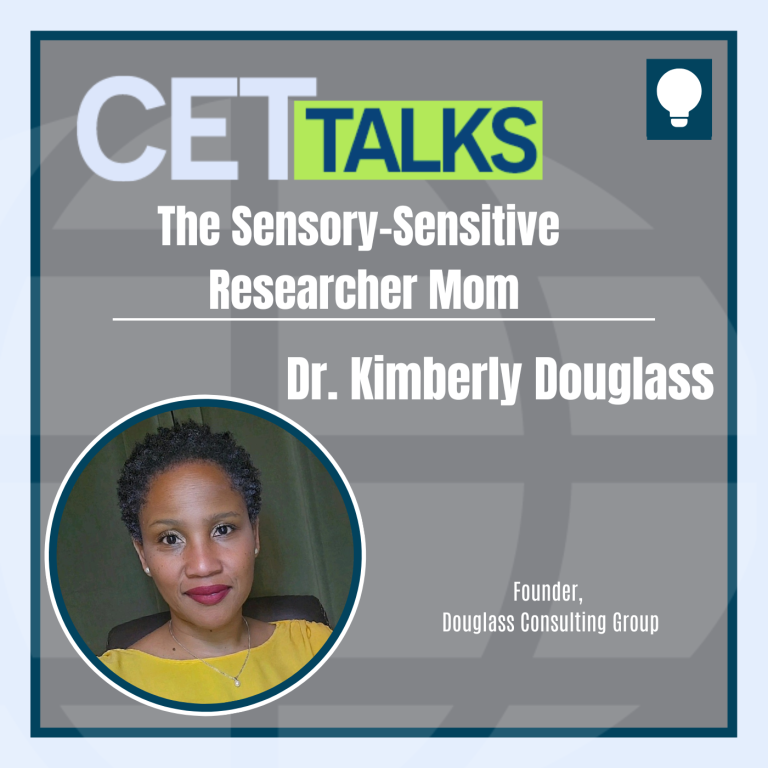
Randy Bowman: Yeah, so as I was sitting there, it just kind of drove home to me this idea that sensory input can be so overwhelming. It can change your experience of everything: focus, energy, and even how safe you feel in a space. That’s why I’m glad today we’re talking with Dr. Kimberly Douglass about neuroinclusion and creating sensory safe spaces.
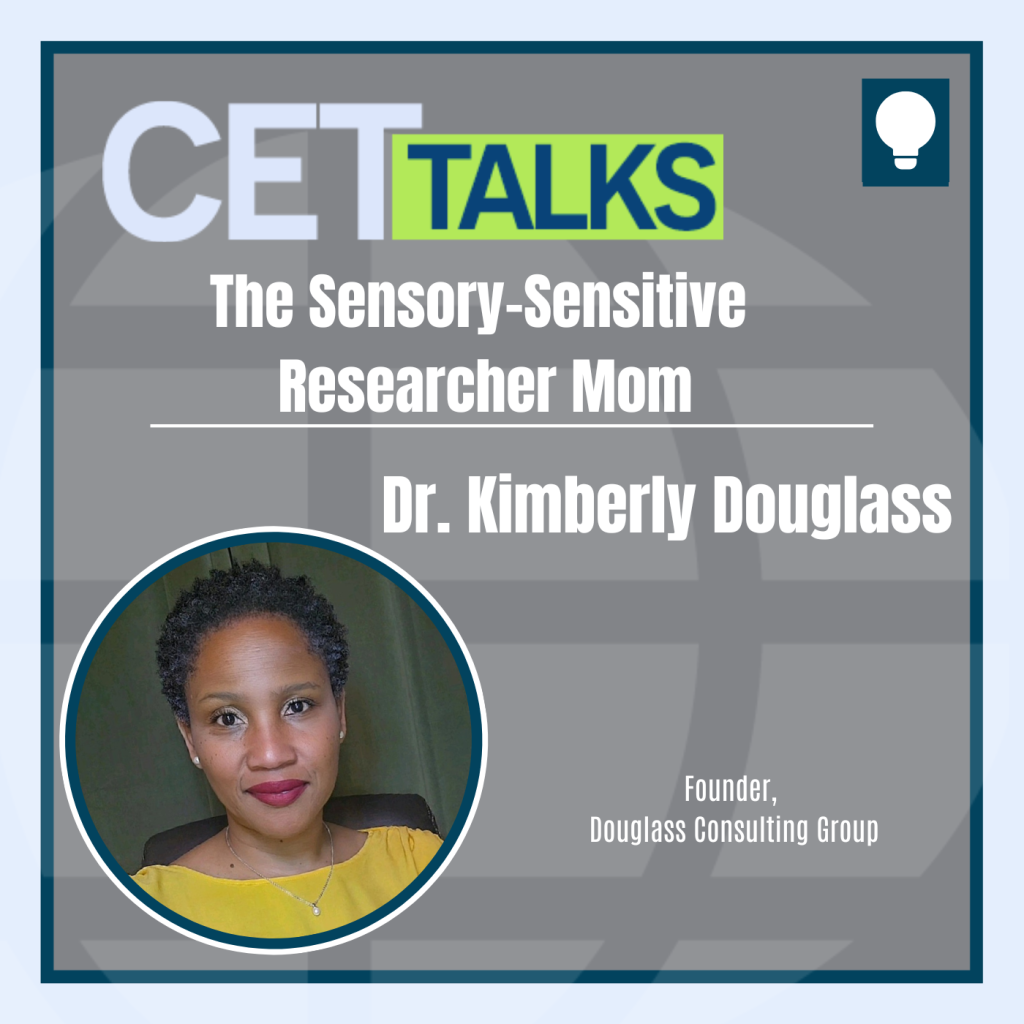
Meghan Conan: Today, we’re really excited to have with us Dr. Kimberly Douglass. Dr. Douglass is the leader of the Douglass Consulting Group, an education and technology advisory service for independent educators. She has over 22 years of experience designing and delivering curricula for adults inside and outside of academia. So, welcome, Dr. Douglass. We’re happy to have you with us today.
Dr. Kimberly Douglass: Thank you. I’m happy to be here today.
Randy Bowman: Dr. Douglass, you’ve shared across several blogs and webinars that you’ve used the experience that you picked up in your professional life doing user experience testing, and you were able to transition that to handle some issues that may have arisen in your home. So, for our listeners who may be unfamiliar, first, what exactly is user experience testing? And how in the world were you able to transition your professional life into your personal life?
Dr. Kimberly Douglass: Okay, this is a topic that I love talking about, and I have talked about it with many parents. User experience testing is exactly what it sounds like. Who is the user of this service, of this product, of this process, of the system? Whose needs are we empathizing with in this process? If you think about a website or you think about a front door, all of these things were created to solve a problem, to solve a design problem. And so, there was a certain user in mind, a person we intended to have a positive experience with using the front door or using a walkway, a cane, or a website. So, that is their user experience. A design for a particular user starts with the understanding that there is a problem that needs to be solved, but even before that, it’s that curiosity about how to solve that problem.
Randy Bowman: So, it’s like if you’re designing a door that needs to be pushed, don’t put a handle on it so that when a person comes to it, they automatically want to pull on it.
Dr. Kimberly Douglass: Right, exactly. I think the second part of your question is that you wanted to know more about my experience with user experience. So, I was the manager of a user experience lab where we had computers set up, and we had eye-tracking software. We were looking at how users interacted with how they used websites. Where did their eyes go on the site, and how many clicks did it take to get to a particular item that we were looking for and that we were testing for within the system? We wanted to know because we were building a data infrastructure for scientists. What I came to realize is that, wait a minute—I have a son at home who is ADHD and autistic. I started to see the needs that he had, and in particular, I’ll talk about a morning routine here. Within that morning routine, it didn’t seem like the user was having a really good experience, with my son being the principal user of that experience. So, I started to apply what I was learning in the lab environment and in conversations. After reading the literature about user experience, I started to apply it inside my home, and it just made me question things. The driving force behind it, of course, was love and care and concern for my son, but also curiosity about what could work for him and what wasn’t working for him.
Meghan Conan: Thanks, Dr. Douglass. That’s a really interesting thought process to have, especially when applying it to the physical space. You’ve described your approach as applying these user experience tests to physical spaces. In your opinion, what senses do you think are most often taxed in a typical office environment, and how might this affect the end user’s productivity?
Dr. Kimberly Douglass: In the office environment, all of the senses may be taxed. And I want to back up a little bit and explain a little bit more about the process I undertook with my son, and then come up to where we’re talking about the office. What we did with his morning routine is we got really curious and very observant about what was happening. What was happening was that we were arriving at school, and everybody was frazzled by the time he got to school because there was too much sensory input introduced in a short period of time. So, instead of going into his room and just flicking on the light, we created a situation where we didn’t turn on the light in his bedroom. When he got to the bathroom, he had a night light and a lamp, never overhead lighting, and we were listening to NPR every morning.
We turned that off. We didn’t need to talk about scorched earth campaigns and doom and gloom early in the morning in order to be able to get to school. So, we decided that it needed to go away. We also physically walked him from what we call station-to-station, walking him from the bedroom to the bathroom, from the bathroom to the kitchen table, and even at the kitchen table, not introducing overhead lighting, putting a lamp on the kitchen table so that he could ease into his day. Whether it is through visual, audio, or tactile stimulation, just making sure we didn’t introduce too much at any one time. So, back to your question about the office, in an office environment, just like that morning experience—I think he was about six or seven when we started doing this—just like with that morning experience with this 6– or 7-year–old child, adults experience this, as well.
In an office environment, where you don’t have a lot of control, or the individual doesn’t have a lot of control over the environment, the sensory input could come from any place. So, we have to look at two different things. Sometimes people are sensory seeking; sometimes people are sensory avoidant. So, they may want input, they may want additional noise or sound in the background, or they may be sensory avoidant. In an office environment, you may have people who are wearing perfume, and you may have a lot of patterns on the wall. One of the popular things in library science in the early two thousands was having what they call the learning commons. In the learning commons, there are these open spaces where you can work together. That’s wonderful for people who like to interact in that way, but not so great for people who need to be in a closed environment where they’re able to shut the door. So, it could come from any direction. You think about all the senses you have—hearing, taste, touch, smell, sight—the stimulus could come through any one of those senses. Then, also, it could come through your relationship with space, your internal balance, what we call your vestibular balance, your inter-reception, being able to pick up cues in the environment; it could come from any number of places.
Meghan Conan: That makes a lot of sense, thinking about it, especially since I realized myself, my comfort level has increased since I moved to my home office, rather than being in the physical office with the overhead lights and the neon and the noise and chatter of other folks working around me. You mentioned a lot about how small changes in the environment, especially with your son adjusting the lighting, can create these huge results. What other small practical fixes have you seen that can create a meaningful change?
Dr. Kimberly Douglass: There are many different things that you can do to support people in their environment. The thing is, a lot of times when we’re talking about the environment, we are talking specifically about neurodivergent people, but it’s important to look at this for all people, to see how they interact with their environment, what they need from their environment. And again, that requires people who have control over facilities, who have control over the environment, to be thoughtful and to be curious about what people need in general. Yes, there are people who have extra support needs and need to be supported in specific ways, but one of the aspects of being in a physical space is being responsible for their user experience in that space. So small things—if a facility is able to do what we call modulation, as much as possible, giving the individual control over their environment; that’s not always possible because this requires a lot of resources.
But if you can put a lamp at someone’s desk versus the overhead light. Most buildings don’t have the luxury of climate control, individually, but if there’s something you can do besides space heaters, which are dangerous by the way, to help people modulate their temperature in their environment, that’s helpful. If you have an open floor plan, make sure that there’s a space where people can go to work in quiet, even if they need to go to a big conference room, or if you have a broom closet that you could turn into a small space. I know with my son and with other autistic children, having an enclosed space like a tent or closet or something like that, as weird as that may sound, is actually comforting to different people. What is really important here is the curiosity about what people need because there will never be a one-size-fits-all. If facility managers are looking at this as, okay, give me a solution, tell me how to do this, it’s not a common denominator or a common fix. It’s not the thing here. It really is driven by curiosity and just being clear about whether or not you’re willing to dedicate resources, time, and other resources to understanding what is needed here.
Randy Bowman: How can leaders begin collecting their own data about the staff experiences without doing formal surveys or intrusive measures or anything like that?
Dr. Kimberly Douglass: Leaders need the data about what people need from the environment. We want to be careful about being intrusive. One important source of data about this is people, as they do exit interviews from the organization. That’s a good opportunity to ask them about their experience with the environment. A lot of times when we do exit interviews, we just want to know, “How did you get along with people? What can we do better?” There could be specific questions about their experience with the environment itself. You can ask things about lighting, you can ask things about carpeting, because all of these things matter. So, if I think of broad categories, you can ask about color, you can ask about lighting, you can ask about texture, and you can ask about space planning. For example, some people have issues with depth perception. If there’s not enough contrast between the furniture and the wall, then that could contribute to accidents.
You can ask about any number of things in the exit interview. Another thing, of course, you can always have a suggestion box; that could be helpful. Another thing is to look at offices or environments that look a lot like yours and maybe talk to people in those spaces that are not connected to your organization or to your work. Go to other places. We do this in research all the time, where we look at a circumstance that has conditions that are very similar to what we’re working on, and we generalize what we see in this environment to similar environments. If there’s another office with 50 employees and you have 50 employees and it’s laid out very similarly, you can ask about the experiences they’re having in that environment. You can partner with that organization, and then that way there’s some detachment. You don’t have that same kind of emotional connection, and you don’t have the power dynamic that you would have asking people in your office.
Meghan Conan: That’s a really interesting perspective on all of that. I definitely like moving away from the formal surveys. I think I probably speak for all of us on this podcast today, saying that you get those, and you never quite feel like you want to be truthful in your responses, not knowing how they’re going to be dealt with or who’s going to see those answers. So, the curiosity and the interest level are interesting. It leads into my next question for you, which is, being curious about things and the environment and the areas around us, what role do you think that curiosity will play in developing better and more inclusive learning environments for adult learners?
Dr. Kimberly Douglass: I think the more we can be curious about the environments that we’re providing, the better the relationships in that environment. It supports, it encourages, it fosters goodwill because it lets people know that you’re interested in them. And going back to the conversation about my son, one of the main assumptions that drove the changes that my husband and I were willing to make is that we were willing to see his humanity and not look at him as a child, but as a person who wasn’t having the life experience that he wanted to have. We wanted to provide him that life experience, so one of the first things we had to do was separate our view of ourselves as his parents and really think about how we help this person. How do we assist this person? How do we advocate for this person through our actions?
And how do we move this process away from focusing on our needs or what we’re trying to push through and focus on what his needs are? And so, I think the more that facilities managers create space to get this kind of feedback, to try out things, to bring in adjustable chairs and lap bands and occupational therapy tools and see if anybody uses them, see if they try them out, try experimenting with different patterns on the wall, different carpet textures, space planning and giving people room. The more that happens, the more goodwill is put into the environment, and it demonstrates that facilities management is interested in addressing the human needs that people have. Because even if you don’t address them, even if you don’t talk about what those needs are, even if you never pay attention to what’s happening in the environment, those needs are still in the environment. Then you’re left wondering, well, why are people so tired by 2:00 PM, or why do people seem agitated when we meet in this space? Investigate the space. That’s the other thing. Part of this is hearing from people, and again, using the suggestion of maybe bringing somebody into a focus group who doesn’t even work in the office; hearing from people, but also taking time to audit the environment.
I am going to say something, and it may sound really weird, but as a manager, if you trust the floor or get a blanket, go lie on the floor and look up at the ceiling, look at the office, look at the environment from a perspective that you’ve never looked at it from before. Imagine yourself being a spider or an ant, and the perspective that you have on the room. Or imagine yourself being a person who is overstimulated by certain kinds of light or a person who has very sensitive hearing. How do they hear in this environment? Put yourself in that environment to think about what that user experience might be.
Randy Bowman: What would you say to leaders who worry that focusing on sensory needs is a soft or less measurable way to address workplace dynamics?
Dr. Kimberly Douglass: The need is still there, even if they perceive it to be soft. When I hear that, it makes me think that they think it’s not important, that they think it’s something separate from the process, that they think it’s something separate from what they’re doing in that environment, but it has everything to do with people’s output and their productivity, how they show up. If the people who work in this environment are using their cognitive resources, their mental resources to block out something annoying the heck out of them, and even maybe painful to them, if they are using their mental resources that way, that means that they’re not using their mental resources towards something that the manager would want to have them work on. And so again, goodwill is important. That in itself is important, but also if you look at it in terms of productivity and output. This is about positioning people to give the best they have to offer and being flexible so they can show up in the best way they would like to show up.
Meghan Conan: Thank you for that, Dr. Douglass. I think there’s a lot we can take away from your thoughts on this topic. As we wrap up, we like to ask one last question of our guests, and that’s what does a world that learns better look like to you?
Dr. Kimberly Douglass: A world that learns better, looks open and curious, and is adaptive to me. When we talk about user experience, and we evaluate what someone’s user experience is with a process, with a service, with a product, with a system, we’re evaluating a design that lived in somebody’s imagination once upon a time, and in their imagination, in their minds, they imagined solving a problem. So a world that learns is clear and open and honest about whose needs are being met; they’re curious about that person. They’re curious about how that world is curious about how to support that person, how to best use their resources, and how to adapt those resources. How to be open and allow the information and the data to be seen, to be experienced, to accept that what I’m seeing, the feedback that I’m getting from the environment, is telling me something really important. I don’t necessarily need to act on it today, but it is important. All data is important. All data is telling us something, and so a world that learns is open to that, is curious about the data that it is receiving, and it is recognizing that there is no one-size-fits-all.
Yeah, that’s it. I’ll stop there.
Randy Bowman: Well, thank you so much, Dr. Douglass. This has been a very exciting, engaging, and informative presentation for us today. I really thank you for walking us through not only your professional, but also your personal experience. So often, our professional worlds and our personal worlds do blend, and I appreciate you being open and taking your experiences from your professional world and applying them to a personal situation and being open about that.
Dr. Kimberly Douglass: Thank you. I want to add one thing here. With my son and giving examples from our experience in developing systems for him—he is now 19 years old, but every time I talk about him in public, I have gotten his permission; that’s our story, but it’s also his story. So, in terms of considering the user and being empathetic to the user, one of the things that’s really important to me is to get his permission to talk about our experiences inside of his experiences.
Randy Bowman: Thank you. Awesome. So what really kind of stuck with me today is how intentional curiosity, the kind that Dr. Douglass practices, can be a real game-changer. We so often just look at data as numbers and dashboards, but this conversation reminded us that data can be the flicker of a fluorescent light, the echo of a whistle, or the quiet feedback of someone who’s just trying to feel seen in their environment. If we pay attention to those signals as leaders, as managers, if we’re cognizant and watching how people react, we can change the design of the spaces; not just our physical ones, but our cultural ones, as well, to truly support how people work, learn, and thrive. Meghan, I’m curious to hear what your takeaway from today’s discussion is.
Meghan Conan: No, I agree with what you were saying, Randy, fully. I think it was really interesting to stop and think about data as more than just numbers, as the ticks of the environment, as people’s reaction to what’s going on around them. I think for a lot of us, one of the things to think about, too, is after the pandemic, a lot of us changed our whole work environment or our learning environment. Now, we’re doing things from home or from different spaces, and how can we ensure that those spaces are also conducive to both? Especially for me at home, thinking about it, to make sure that my space is conducive for both my working and my living, since I do both in the same area. So, it’s something I think I’ll be looking at as we move forward.
As we wrap up today’s discussion on neuroinclusion, we’d love to hear from you, our listeners. What lived experiences have you brought from your home life into your work life, and how have they shifted your personal and professional perspective?
Randy Bowman: Don’t forget that you can submit topic ideas, suggestions for guests, review our archives, and more at the CET-Talks website, available at cet-talks.org. Don’t forget to subscribe to this podcast on your favorite platform so you don’t miss any episodes. Thank you so much for joining us today.
Host: You’ve been listening to CET Talks, the official podcast of IACET. Don’t forget to subscribe to the podcast on Spotify, Apple Podcasts, or wherever you listen to podcasts. To learn more about IACET, visit iacet.org. That’s I-A-C-E-T.org. Thanks for listening, and we’ll be back soon with a new episode.