Host: Welcome to CET Talks, the International Accreditors for Continuing Education and Training’s podcast, where we convene thought leaders in the continuing education and training ecosystem to share ideas, research, best practices, and experiences that promote the creation of a world that learns better. Enjoy the episode.
Randy Bowman: Hello, and welcome to CET Talks. My name is Randy Bowman, IACET’s president and CEO, and I’m excited to be here with our leadership track co-host, Mike.
Mike Veny: Hi, Randy, and hello to our listeners out there.
Randy Bowman: Well, Mike, I was at a conference last week with some regulators in the occupational licensing industry. What I took away is that there is a looming workforce crisis definitely coming to the US. Lower birth rates and retiring boomers are leaving a big gap in the credentialed professionals who are able to do jobs competently. And the demand for people who can do those jobs is way outpacing the replacement rate of those professionals. It was kind of worrisome, if I could be quite frank.
Mike Veny: Yeah. Well, I’m actually in Texas right now. To be transparent, I’m learning that, in my work as a speaker and trainer, there are some changes that I need to adjust to. I’m learning a lot about work, and we need to get on this.
Randy Bowman: Well, that’s why I’m very excited to have our guest today. Do you mind introducing the audience to her?
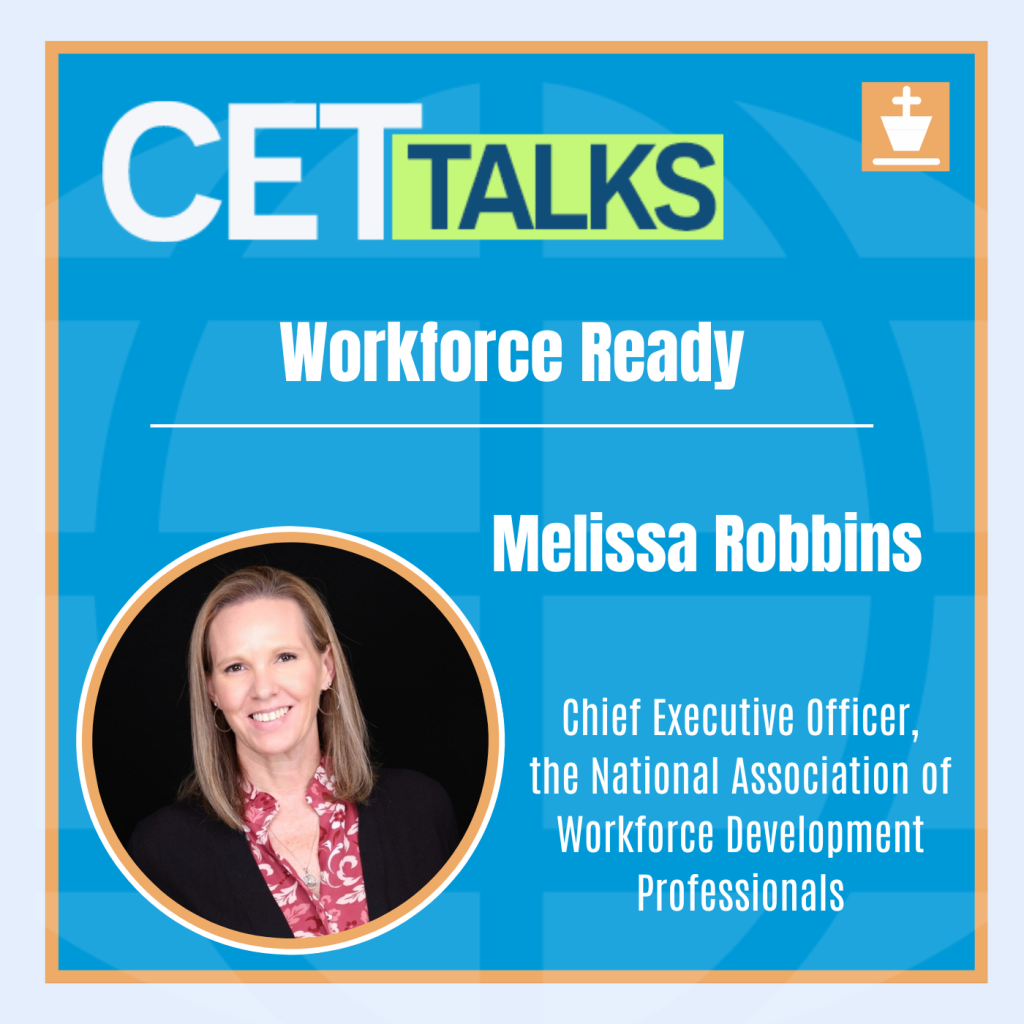
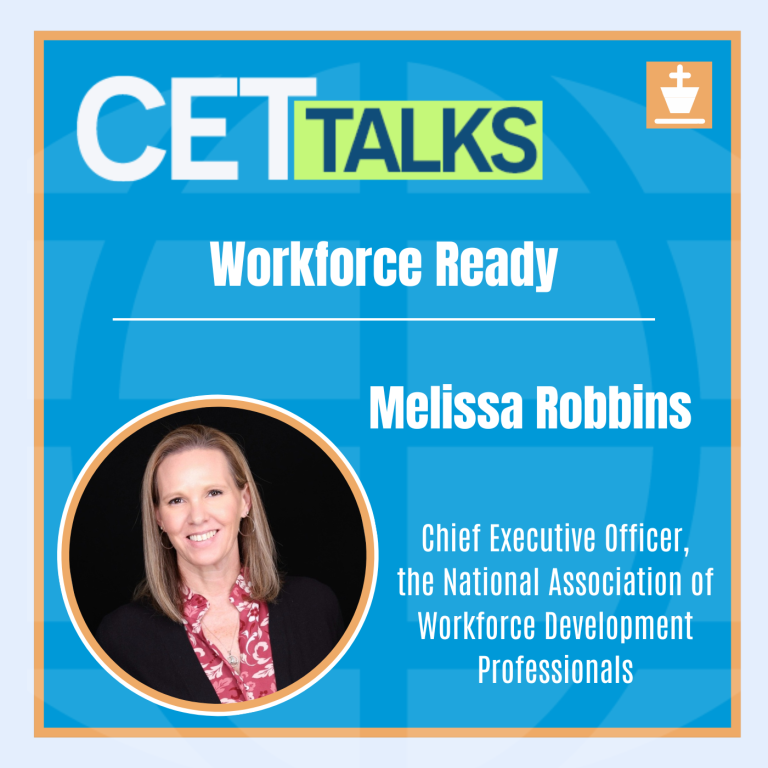
Mike Veny: Absolutely. I’m super excited for today’s guest, too, Melissa Robbins. Melissa is the Chief Executive Officer for the National Association of Workforce Development Professionals, also known as NAWDP. She guides NAWDP’s growth and services for over 5,400 members and 1,600 certified professionals nationwide. She previously served as executive director of a workforce development board with expertise in finance, compliance, and systems strategy. Most importantly, she deeply understands the mechanics behind effective workforce systems and drives strategic resource allocation for sustainable success. Melissa, welcome to our show.
Melissa Robbins: Thank you for having me.
Randy Bowman: Well, thank you for being here. Obviously, workforce development is a very important topic. It’s a phrase that we hear thrown around a whole lot, but my experience is that many people don’t fully understand what the term ‘workforce development’ encompasses. Can you shed some light on that for us, define what workforce development is for those outside of the field, and explain why more people should be paying attention to it?
Melissa Robbins: I’d love to. Workforce development is a comprehensive approach to preparing individuals for success in the labor market while making sure that businesses have access to the talent they need to grow and thrive. It brings together education, training, support services, and employment strategies to strengthen local economies and ultimately empower communities. At its core, workforce development is about connecting people to opportunities, upskilling workers, closing equity gaps, responding to employer needs, and adapting to the evolving demands of the labor market, which we were just talking about. They’re definitely evolving. NADWP has actually just launched a new website. We’re super proud of it. It has a great graphic of how all of these pieces fit into the beautiful puzzle. But why should people pay attention? I think number one, economic growth, a strong workforce, fuels business expansion, equity, and access. So, ultimately, workforce development reduces barriers. We know that we have job seekers who lack childcare, transportation, and digital skills.
Melissa Robbins: We want everyone to be able to fully participate in the economy and then impact everyone overall. It’s not just about job seekers. It affects students who are planning their careers, mid-level professionals who need new skills, businesses that are trying to grow, and ultimately, the health of the community overall.
Mike Veny: I love that you said you want everyone to be able to participate in the economy. One thing that I’m taking from you already is that maybe that starts with being aware of workforce development and trends and what’s happening, in addition to our typical economic news. Now, NAWDP has seen remarkable growth in membership and certified professionals. What’s driving this interest in credentialing for frontline workforce professionals, and how does the CWDP certification support long-term success in the field?
Melissa Robbins: I think we’re seeing this surge because frontline workforce professionals want to be recognized for the work that they do every day. Workforce development overall has become more critical. Communities are rapidly changing. Obviously, the labor market is changing. People want to feel equipped, and they want to feel a part of a professional community where we’re sharing promising practices. And ultimately, where we’re sharing what I’m dealing with in Missouri is maybe not exactly the same, but it’s similar to what you’re dealing with in Texas, and it’s similar to what you’re dealing with in Virginia. So, having that network of professionals broadly across the country. I think long-term success, the CWDP does provide a nationally recognized standard. It shows employers, partners, even the people that we serve—our customers, our job seekers, and our businesses—that these professionals meet a high bar of excellence.
Melissa Robbins: It’s also not a one-and-done; there is continuing education. We support lifelong learning for long-term success, and I think it builds credibility within the workforce system. In many ways, I think the growth that we see reflects the pride in the profession and the commitment to continuous improvement.
Mike Veny: Can I just ask one more question? I forgot to ask this, and I’m sorry. Can you just clarify what CWDP stands for? I think I know, but I want to hear from you.
Melissa Robbins: Absolutely. CWDP is the Certified Workforce Development Professional, just like NAWDP is …well, there’s a long name that you already said, but it’s a lot easier conversationally to say NAWDP offers the CWDP.
Randy Bowman: Thank you. Can you walk us through how credentialing helps legitimize and professionalize a sector that often operates behind the scenes, but plays such a critical role in economic resilience?
Melissa Robbins: Yes. Workforce development is definitely one of those fields that is absolutely essential, but oftentimes invisible. We are the ones who are connecting people to training, helping businesses find talent, supporting communities as these economies shift around, and yet the profession doesn’t always get the recognition that it deserves. I think if we talk about legitimizing the field, credentialing creates a recognized standard of excellence, something that your organization knows very well. It says overall, here are the core competencies, here are the ethical guidelines, and here are the professional expectations that define our work. When someone earns that credential, their CWDP, it demonstrates to a whole host of employers and policymakers that the public workforce system is important. Then I think it does professionalize the sector. It gives us a shared language and framework, which supports career mobility. So, it’s a nationally recognized standard. You get it one place, and it’s recognized everywhere. Even though we do operate behind the scenes, I think that the CWDP helps spotlight those professionals.
Mike Veny: It’s so comforting to talk about standards and consistency. It warms my heart that we do this. That being said, we have a lot of people listening to this who are continuing education providers. Some of them are IACET providers, some of them aren’t. What role do you think continuing education providers, like IACET-accredited organizations, can play in strengthening pathways at the local and national level?
Melissa Robbins: I think continuing education partners, especially IACET-accredited partners and organizations, play a powerful role in workforce development. They’re often the bridge between traditional education and the real-time needs of employers. There’s not just one learning model. At the local level, they provide accessible, flexible training that help people upskill. They can respond to just- in-time employer needs. And because they’re accredited, learners and employers know that there’s quality and rigor in that. So it’s something that we can trust. Nationally, again, I think it goes back to that consistency and credibility that IACET-accredited providers can give us, and we can align workforce pathways with emerging priorities at the national level. So, continuing education, it definitely strengthens workforce pathways. Again, I think I would highlight the accessibility, the responsiveness, and the portability of what it provides.
Mike Veny: Can I ask a follow-up question to that? I’m the CEO of an accredited provider here, but would it help us providers to highlight that more in our marketing that we’re supporting workforce development? Do you think it would help the profession overall? What are your thoughts on that?
Melissa Robbins: I think so. I think that connection is key, and knowledge is power. If you have workforce development professionals who are in a community, they know the pool of job seekers who are looking to advance their career pathways, and they know what the businesses are looking for. If they don’t know what you have to offer, that’s not a tool that they can use in our toolbox. So yes, I think promoting that relationship, making sure that everybody in that community or nationwide knows what you do is beneficial, because if we don’t know, we can’t use it.
Randy Bowman: That is so true. You’ve got to have the right tool for the right job. And if you don’t even know the right tool exists, you’re going to use the wrong tool and be ineffective. We definitely are trying to do more to ensure that your constituents are very much aware of our stakeholders and how the two interplay.
Randy Bowman: Looking ahead, what’s your vision for the future of workforce development, and what would you say to leaders who are still underestimating the impact of credentialing and continuing education in this space?
Melissa Robbins: I think it follows up on what we just talked about. There’s not just one educational model, and so we need to have all of the tools possible available to us. People need to understand, again, the great work that goes into that and the credibility of all of those educational models. I think my vision for the workforce system is to become more seamlessly connected. So, training, employers, and community supporters. There is a lot of community-based activity going on, and we say this all the time: we’re not operating in silos, but we’re working together. I guess a future where every individual has a clear pathway to opportunity regardless of age or placement in their particular career at that time, new learners, mid-level, somebody in the middle of a career, maybe they want to advance that same career or move to a completely different one, which we’re seeing a ton of lately.
Melissa Robbins: And then for the leadership message, I think that those leaders who still see credentialing and continuing education as optional, we are moving too fast for that. Continuing education is not optional; it is necessary. I don’t want anybody to be left behind. So again, we have to take that option off the table, and credentialing provides the standards and credibility to elevate the profession. They’re not just add-ons. Going back to the tool thing, they’re not just add-ons; they’re essential tools for building that resilient talent. If we want communities and businesses to thrive, which ultimately helps all of us, that’s the core of what we’re doing. We want these communities; we want our country to thrive. We have to invest in people’s skills. I think that this is one of the smartest ways to make that happen.
Mike Veny: Can I ask you, what are some of the most pressing labor market trends that you’re seeing across NAWDP’s network, and how are continuing education and professional development helping members respond to those trends in real time?
Melissa Robbins: A couple of big trends that we’ve seen lately shaping the market, going back to the continued pace of technology, change, automation, and AI. All of those things are happening. Like it, love it, you can’t leave it; it is here. Those are creating new opportunities, but those new opportunities require rapid re-skilling and up-skilling for everyone. And then we’ve seen a demand for middle skill jobs; roles that require more than a high school diploma or equivalency, but often less than a four-year degree. Companies are really pushing skills and saying, “If you have the ability to do these things, we can show you exactly what we need you to do at company XYZ.” It doesn’t always require a four-year degree. So again, I love continuing education. I don’t want to take any model off of the table; I think we need to look at all of those and what is best for what you’re actually doing.
Melissa Robbins: I think our frontline workforce professionals stay connected to emerging practices and those national conversations. We don’t just want to react to trends; we want to stay engaged. We want to help shape that response and be more proactive and less reactive whenever possible.
Randy Bowman: Thank you. That’s so important for us to remember what those frontline workers are doing and what an impact they have. Here at IACET, we always like to end our podcast with one final question, and so, Melissa, what does a world that learns better look like to you?
Melissa Robbins: To me, a world that learns better is one where learning is truly lifelong and accessible to everyone. It’s a world where education doesn’t stop at graduation, regardless of where you’re graduating from, but continues as you grow, as you change careers, as you adapt to new challenges. It’s where learning is flexible and connected to real opportunities. So whether you’re a student, a worker, a job seeker, or an employer, you see that pathway forward. And ultimately, I think that a world that learns better is a world that works better.
Randy Bowman: Nicely said, nicely said. Melissa, thank you so much for being here with us today. I cannot believe that our time is already up. I feel like we’ve just gotten started, but it’s been great having you and learning this. One of the things I’m going to be taking away today is that reminder that credentialing is not just about earning a title; it’s about creating that shared language that connects workers, employers, and communities. By professionalizing a field as important as workforce development, certifications like the CWDP are building consistency, credibility, and most importantly, clear pathways for career mobility. Thank you so much for the work you’re doing. It is probably having impacts that we can’t even imagine and that are so unseen, but we want to let you know that we are very grateful for the work that’s going on.
Melissa Robbins: Well, Mike—thank you for having me. Really fast, I want to echo the sentiment that what I see IACET doing, and the work that you guys do, does exactly what you just said across such a broad range of industries. I know we’re talking about workforce development today, but that’s really what you guys do best in so many ways.
Randy Bowman: Thank you for that.
Mike Veny: For me, I took so much from this. To our listeners, one of the things that I took away that was so important, and I wish we could have just gone deeper on, is that the more effective providers are at workforce development and promoting it, the more of a win it is for everyone else. It’s just this win, win, win overall. It’s important for us to take a deeper look at that and how we’re doing that individually in our organizations. As we wrap up today’s discussion on workforce development, business credentials, and the future of economic mobility, we’d love to hear from you. What role does credentialing play in your own field or career, and how has that changed over time?
Randy Bowman: Don’t forget you can submit topic ideas, suggestions for guests, review our archives, and more at the CET Talks website available at CET-talks.org. While you’re there, don’t forget to subscribe to this podcast on your favorite platform so you don’t miss any of these great, enlightening episodes. Thank you so much for joining us today.
Host: You’ve been listening to CET Talks, the official podcast of IACET. Don’t forget to subscribe to the podcast on Spotify, Apple Podcasts, or wherever you listen to podcasts. To learn more about IACET, visit iacet.org. That’s I-A-C-E-T.org. Thanks for listening, and we’ll be back soon with a new episode.