Host: Welcome to CET Talks, the International Accreditors for Continuing Education and Training’s podcast, where we convene thought leaders in the continuing education and training ecosystem to share ideas, research, best practices, and experiences that promote the creation of a world that learns better. Enjoy the episode.
Randy Bowman: Hello, and welcome to CET Talks. My name is Randy Bowman. I’m IACET’s president and CEO, and I am excited to be here with our leadership track co-host, Mike Veny.
Mike Veny: Hello, Randy. And hello to our listeners. I’m super excited to be here, especially for today’s topic because, Randy, leadership has so many nuances. Wouldn’t you agree?
Randy Bowman: To me, it’s kind of like traveling into an airport. You just never know where you’re going to go. You never know what’s around the next corner, what detour you’re going to have to do, what luggage or…I mean, it’s just amazing how much there is.
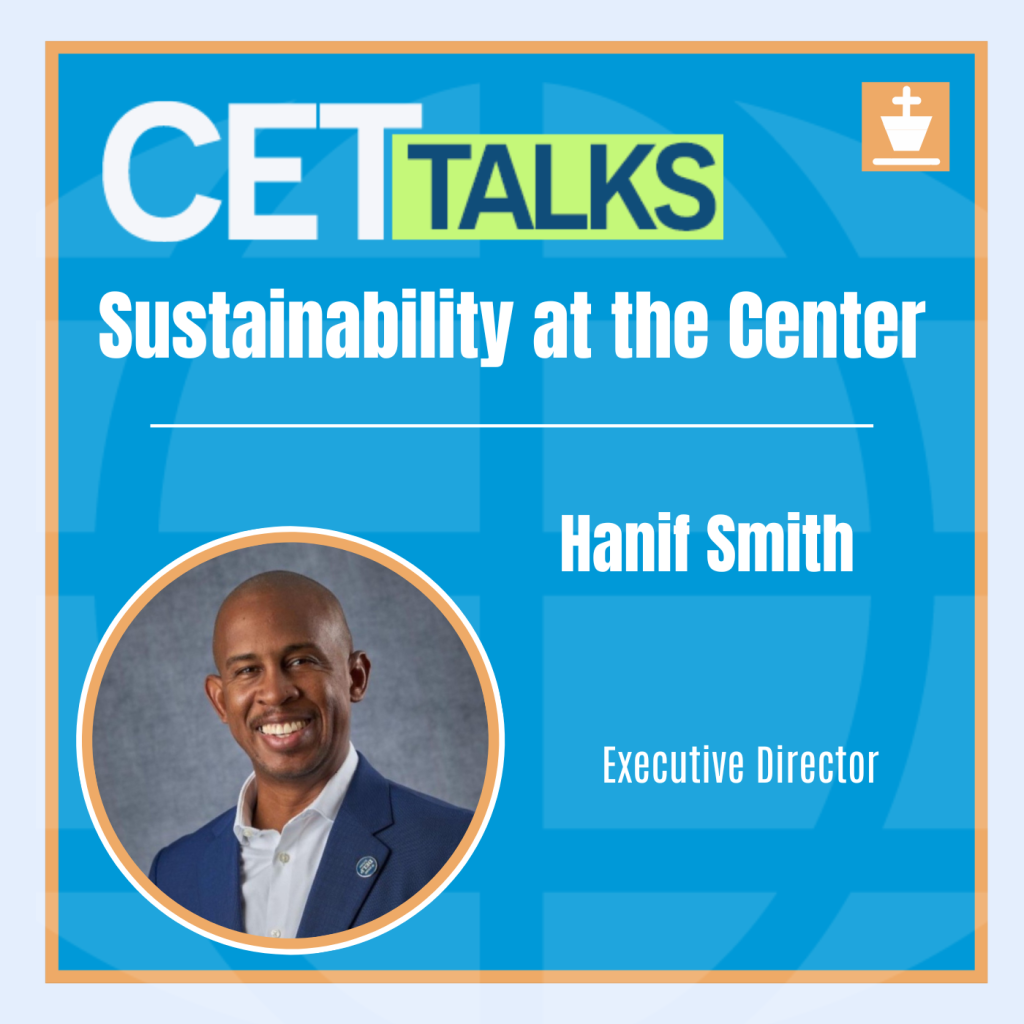
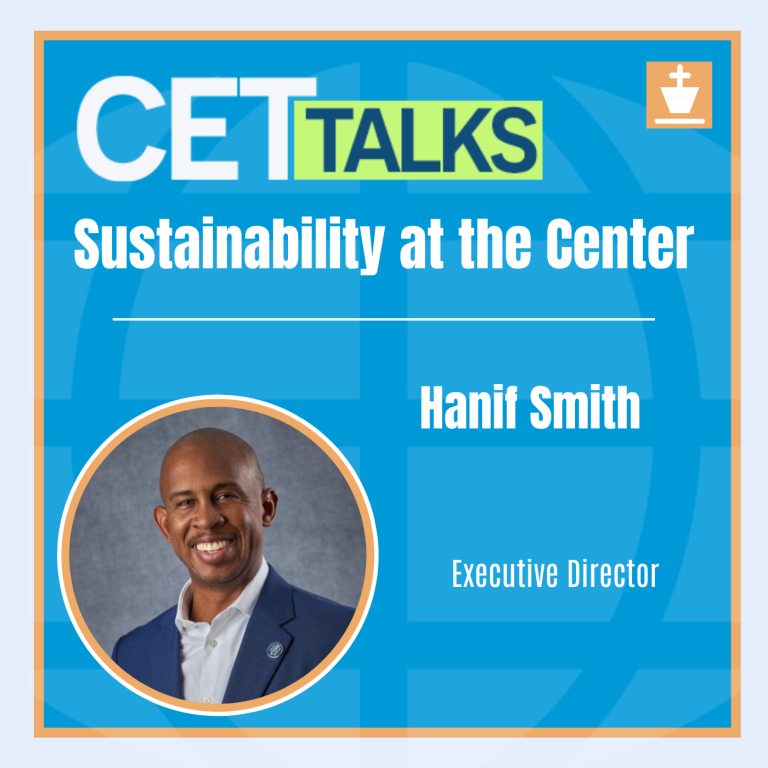
Mike Veny: Yes, and today’s episode is all about cultural leadership, which has lots of nuances, kind of like being in the airport. Our guest today is Hanif Smith, an account executive for nonprofit resources. Hanif has 19 years of experience serving in the association management space, currently serving as the executive director for the Healthcare Hospitality Network, the American Society for the Alexander Technique, and the United States affiliate of the International Building Performance Simulation Association. Hanif, welcome to our show.
Hanif Smith: Thank you very much. Thank you, Randy. Thank you, Mike. It’s really great to be here.
Randy Bowman: We’re glad you’re here with us, and we look forward to the insights that you’re going to share with us today. Speaking of that, you’ve worked across multiple countries, cultures, and industries as an association management professional. How have all of those experiences shaped your view of leadership in the association management function?
Hanif Smith: Yeah, yeah, thank you very much. That’s a great question. In my background, I’m coming from working in an association space in Jamaica, and in that role as an association executive, my work took me all across the Caribbean region. I’ve worked in Barbados, Trinidad, and Curacao, the French Islands, and Martinique. So, I’ve worked both across geographic areas and across different cultures. I think the number one thing I’ve learned is that leadership isn’t just about having the right answers at the right time, but it’s about being able to listen and adapt. I started my career as a community development officer before working in the association space, working for the Social Development Commission, a government agency in Jamaica, responsible for community development efforts and engaging communities in those efforts. In that role, I was assigned to a rural community, the parish where my dad was born. It’s a place where I didn’t have a lot of lived experience.
What I eventually learned—I was young at the time—is that I built much stronger connections, and I was much more effective in my role when I presented as my authentic self. I allowed my natural curiosity about the things I didn’t know about their community to shine through, and to give them the opportunity to respond. I learned I didn’t need to pretend to have had the same experiences as the people around me, but rather lean into that natural curiosity and empathy, and that allowed me to build trust. I think the other thing I’ve learned over the years is that every culture has its own rhythms, its own cadence, its own set of norms around what it takes to build trust, how decisions get made, and what people need to feel valued and respected as part of a team or part of a collaborative effort.
Even with all those differences, I think what carries across all of that is the need for clarity of purpose. So whether you’re working in a rural community or a French territory in the Caribbean, the idea is to have that clarity of purpose and empathy for the persons around you, to understand where they’re coming from, what they’re going through. I think that matters, especially for us who work in the association space because we’re not just leading our staff, we’re working with volunteers, with the boards, with the entire communities that are really tied together by a singular purpose, but there’s a lot of diversity within that space. I think my global experience has taught me how to engage people while keeping the mission at the center; understanding that people are coming from different places, there are different points in their journey, that different experiences, different needs and different expectations. I think in the end, the leadership is about being curious about all of those things, being honest about where you are coming from, asking the right questions, and then creating a safe space for the persons around your team members, collaborators, to contribute to the direction of the association.
Mike Veny: Speaking of showing up as your authentic self, I love Jamaica. I was there back in July. I go there as many times as I can per year, and I’m addicted to jerk chicken.
Hanif Smith: I’m glad to hear that.
Mike Veny: I just wanted to put it out there, but back to the interview here. Within the leadership space, we talk a lot about this term ‘executive presence’, the idea that even when an organization is going mad, the leader is able to be solid and resolute. Can you tell us more about that?
Hanif Smith: When I think about executive presence, I think the first thing I think of is what it’s not, right? So, it is not being the loudest person. It’s not always being the most polished, and it’s certainly not about having all the answers all the time, but I think it’s about being steady in uncertain times. It’s about projecting clarity, confidence, and calm when things are getting challenging. And while you don’t have to have all the answers, it’s about being able to ask the right questions and projecting that confidence so that others can trust you. It’s also about projecting your confidence in the team that you’re working with, in their abilities, and then the team or collective ability to weather the storm. I think executive presence, it really begins with authenticity, being yourself. As a black man in leadership, I’ve had to navigate expectations.
Sometimes I clash with my identity or my personal style. Over the years, I’ve learned how to handle those expectations and sometimes subvert those expectations, but still show up as a version of myself that I recognize in the mirror. That’s something that I come back to all the time. We need to make adjustments in terms of how we engage and how we show up, but I always want to make sure that I’m showing up as a version of myself that I know and I recognize. I think if you’re showing up in an authentic way, I think that builds your credibility as a leader and contributes to your executive presence.
Mike Veny: Thank you for that answer. I have so many follow-up questions, but I’ll try to keep this one brief here. When you say steady, I’m guessing you’re referring to consistency, like keeping a consistency in your presence as a leader during rough times. Let’s go back into this thing around comfort and cultural identity. Another term that’s in there is code switching, because sometimes people of a certain culture, for those of you who are listening, communicate in a certain way and find that they feel pressured to switch how they communicate in certain settings. One of the terms for that is ‘code-switching’. I wanted to ask you about that. This executive presence, how does it tie into personal comfort and cultural identity? Tell us more about that.
Hanif Smith: I think comfort and authenticity are at the heart of sustainable leadership. We have to find a way to be comfortable with, and I keep going back to this term, the version of yourself. They say people contain multitudes, so when we talk about showing up for our authentic selves, there are different versions of us that we present as. I always want to make sure that I’m showing up as that version that I recognize. I think comfort and authenticity allow me to show up as who I really am, so I’m not performing, but I’m actually leading. I think if I have to perform on a day-to-day basis, then that becomes exhausting. If your leadership is draining you, if you’re feeling exhausted by it, then you’re not really good to anyone. You’re not good to your team. I think being an authentic self, it takes that anxiety, that stress, out of the situation to allow you to be your best self.
Someone said to me once that having to put on a mask, having to pretend, having to code-switch, it can make your 40 hours feel like 80, and that wears on you over time. I think you need to have that comfort level so that you can show up in your best form for your team. But I think the comfort also allows us to build trust, because if we’re comfortable with ourselves, I think people respond to that. People feel that, and I think trust is what sustains teams in the long term, especially when things get difficult and challenging. People need to be able to look to their leadership with trust and confidence, that we might not have it figured out right now, but we will have it figured out. I think being comfortable for me means working on making sure that I’m finding my center, understanding the ‘why’ of why I do what I do, what my core values are, and being true to those values and then showing up consistently, especially in tough moments. I think when we’re comfortable with ourselves, we don’t waste our energy managing our image, but focus on serving our teams, building stronger teams, and, hopefully, a more resilient organization.
Randy Bowman: You talked a little bit about consistency several times, but also in other conversations I’ve had with you, you’ve talked about the power of the pivot and being adaptable. Can you talk about the importance of adaptability, and at the same time, how do you manage that tension between being able to pivot while being consistent?
Hanif Smith: I think we’re living in a world now where disruption is constant, right? We’re navigating technology shifts; our expectations of our members are constantly changing. We’re experiencing generational shifts and, of course, unexpected crises. I think, as leaders, we don’t thrive by just clinging to the rigid plans that we have in place. We thrive by being able to pivot while maintaining our focus on the mission. For me, that means constantly centering and understanding that “Why, what’s our purpose? What’s our mission? What drives us?” Then you can pivot around the whole and how we’re going to respond to specific circumstances and specific challenges. I think as long as we remain laser focused on our ‘why’ and grounded in our values, then we have the ability to change course; not change course in terms of where we’re trying to get to, but the way we’re trying to get there.
I think that takes some humility. You have to admit if something isn’t working; you have to be able to admit that, take your ego out of it, and say, “Hey, this isn’t working. We need to go back to the drawing board.” And the ability to bring people along as you’re making that shift, to give them that confidence, that courage to say, “We can shift from what we are trying to do and approach it in a different way as long as we stay focused on where we’re trying to get to.” So, it’s not just kind of reacting to things; it’s being agile, it’s being intentional. It’s also about being forward-looking. The more we can engage in foresight, the more we can engage in looking ahead to anticipate challenges. Then we can do some scenario planning and be prepared to manage those when they do arise.
Mike Veny: You are serving as the executive director for the American Society for the Alexander Technique, and for those of you who are listening, the Alexander Technique is a movement method and complementary practice for improving balance, coordination, posture, and overall mobility through conscious awareness and the release of tension. Basically, you’re getting the body to work and collaborate with itself. I bring that up because I’m a musician, I’m a drummer, and I need to get an Alexander teacher at some point. For any of you listening who actually have any mobility issues, it’s a great technique to check out. No, they’re not paying us to say that; that’s just my own experience. So, when it comes to cross-industry collaboration, different parts working together, how do you approach that while maintaining a unified organizational culture?
Hanif Smith: Well, I can’t say enough about the power of collaborating across industries. You’ve been to Jamaica. You may have heard someone say, “One hand can’t clap.” What does that mean? It just means that a hand can’t clap by itself, right? So, one hand can’t clap by itself, and it means that we can’t accomplish a lot alone. Cross-industry collaboration brings innovation; it provides new perspectives that bring resources to the table that we can bring to bear against the challenges that we’re collectively facing. But it can also create clashes in culture. For me, I think our culture has to be our anchor as an association, as a team. I think any successful collaboration has to be anchored in our ‘why’, our values, and our identity, and we have to be clear about that.
We have to look for collaborators and partners where we can identify those values, where we align. In some instances, if values don’t align, it might mean that it might not be the ideal collaboration. It may mean that you have to step back from that collaboration if fundamental values don’t align. I’m not talking about style choices or things that are kind of superfluous. Fundamental values, I think, are really, really important, and if those core values don’t align, then you may have to step away from that collaboration. But if you do find that the values align and your missions work together or your missions align as well, then you can welcome different approaches to how you approach challenges without losing yourself in the process. It’s not about blending everything together. It’s you trying to build bridges between your collaborative partners, aligning around those shared goals, but respecting each organization’s DNA. We’re not trying to change an organization into us, and we’re not trying to morph into that association or that collaborative partner, but we’re trying to work with them and stay really grounded, again, in our mission and our values. I think as long as we have those as our foundation, then we can have really successful collaborations without losing our culture and create a unified culture between both organizations, at least within the framework of that collaboration.
Randy Bowman: Well, Hanif, this has been a great conversation, and it’s gone by so fast. I’m just surprised at how much time we’ve already taken up. As we wrap up, we like to ask one last question of all of our guests, and that is, what does a world that learns better look like to you?
Hanif Smith: That’s a great question. It’s a very personal question for me, because one of the things that I’ve struggled with as a young person was the fear of failing. I think a world that learns better looks like a place where failure is treated as an important learning opportunity and not something to be afraid of; where curiosity is encouraged. I think it’s a world where, within formal learning structures, people can learn in a way that makes sense for them. People learn differently; I think we just have to have more opportunities for people to learn in ways that fit their learning styles, fit their needs. I think beyond formal learning, beyond formal degrees and certifications, it’s a world where learning is woven into the daily work and life of individuals, so that we’re constantly learning.
It’s not just about what you learn formally, but you’re constantly having formal and informal opportunities to learn, grow, and develop. I think for associations, because that’s my space, it means having spaces where members aren’t just consumers of knowledge, but that they’re collaborating to build knowledge, exchange knowledge, experiment around how things are done, and have opportunities to grow together. I think those are learning opportunities that people really, really are drawn to and are very effective. And then it’s just a world where people are empowered to continue to evolve, and where organizations see learning as a strategic advantage, not just something that’s kind of on the side or non-use revenue. We talk a lot about non-use revenue, but we need to see learning as a strategic advantage, both within our associations and within our memberships.
Randy Bowman: Well, Hanif, thank you so much for delivering an engaging and informative presentation for us today. What really resonated with me the most from our conversation is this idea that leadership isn’t necessarily about having all the right answers, the right look, or the right exterior attributes. It’s really about having the right ears and being able to listen and about having the inner attributes of calm, confidence, and clarity. I loved it when you said those three Cs; they really resonated with me. Yes, that is what it looks like to be a leader and be an authentic leader, which is what’s on the inside, not the outside. So, thank you, Hanif, for sharing those great insights with us. Mike, what are your takeaways?
Mike Veny: Randy, you and I are once again on the same page. I feel like we don’t even message each other or text each other; we just have the same takeaways. I’ll add to that another way of looking at it, and you said it in your words, Hanif—performing versus leading. That’s really, really important because so much of life actually is a performance, right? It’s how we show up. People are looking at us, and we have to be conscientious of that. But there’s a difference between that and leading, and I think that’s its own subject to dive into. So, as we wrap up today’s discussion on cultural leadership, we’d love to hear from you. How do you view the importance of cultural leadership in organizational stability and growth? Is it an afterthought, or do you see it as a secret to success?
Randy Bowman: And don’t forget, you can submit topic ideas, suggestions for guests, review our archives, and much more at the CET Talks website, available at cet-talks.org. Don’t forget to subscribe to this podcast on your favorite platform so you don’t miss any of these great interviews. Thank you so much for joining us today.
Host: You’ve been listening to CET Talks, the official podcast of IACET. Don’t forget to subscribe to the podcast on Spotify, Apple Podcasts, or wherever you listen to podcasts. To learn more about IACET visit iacet.org. That’s I-A-C-E-T.org. Thanks for listening, and we’ll be back soon with a new episode.